“Change is hard at first, messy in the middle, and gorgeous at the end.”
Robin Sharma
In my work advising and leading change, I always remind leaders that you can’t skip the messy parts if you want to reach the best results.
Robin Sharma describes transformation well. Still, leaders often get so focused on results like ROI, efficiency, or Go-Live dates that they forget to lead with kindness during tough times.
After more than 20 years leading change—from small business growth to large M&A or ERP projects—I’ve learned that technical success depends on how we handle the transition.
- Change refers to the external event, such as implementing new software or merging companies. This is what happens to an organization from the outside.
- Transition, on the other hand, is the internal and psychological process individuals experience as they adjust to this change. It is the human response to the external event.
I use the William Bridges Transition Model to help leaders and change agents see why it’s important to move through these three phases with fairness and empathy. In a recent ERP project at a small biopharma company, we had to delay the start date several times. Everything took longer than planned, and people grew frustrated with staying on the old systems. Being stuck between the planned ending and the new beginning is tough.
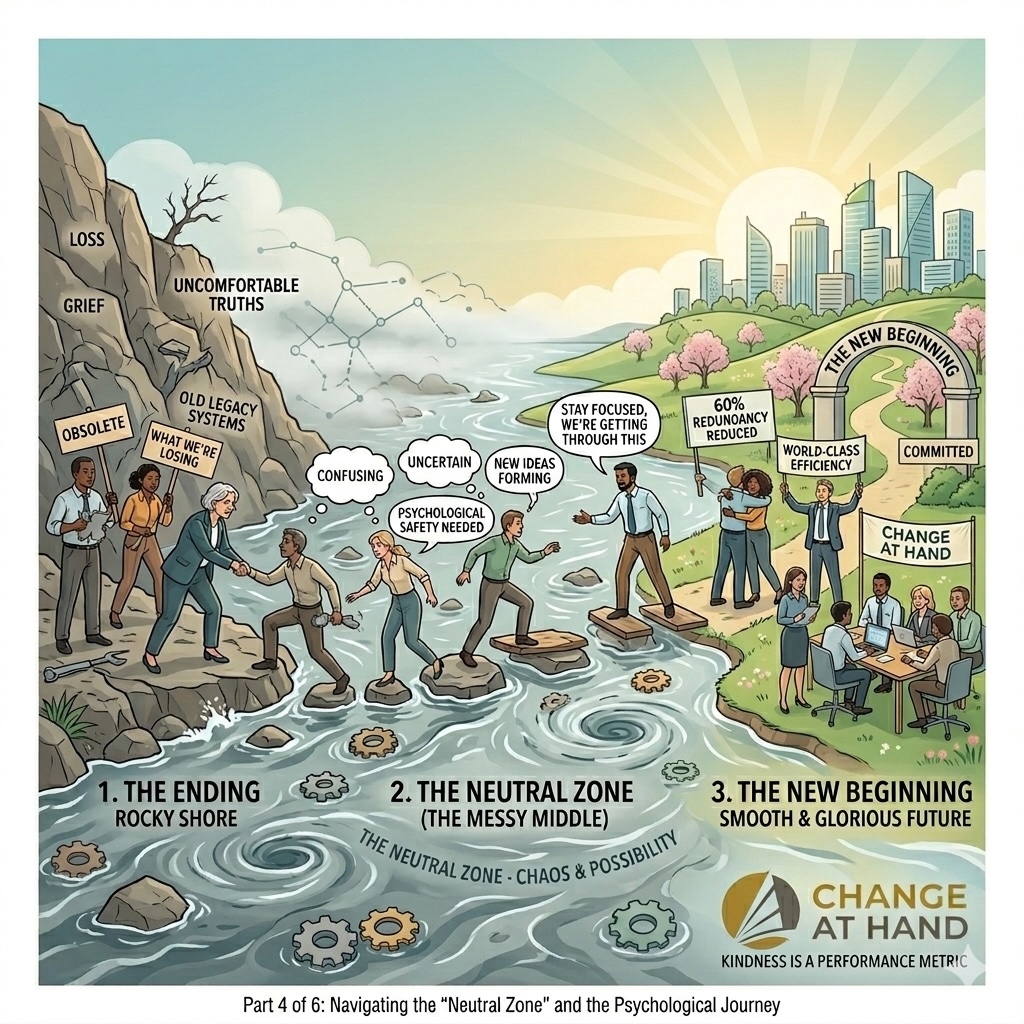
1. The Ending (The Hard Part): Every change begins with a loss or a step away from what’s familiar, even if it feels rough. Kindness means recognizing what people are leaving behind, like their skills with an old system or a comfortable routine. You can’t reach the best outcome without respecting the hard goodbye to that certainty.
2. The Neutral Zone (The Messy Middle): The time between the old and the new can feel confusing and uncertain. Leading with kindness here means giving people a sense of certainty and psychological safety as teams find their way. Leaders can help by holding regular check-ins, listening to concerns, running open Q&A sessions, and being honest about progress and setbacks. If you don’t have all the answers yet, say so, but share what you do know and what’s next. Encouraging peer support and celebrating small wins also builds trust. This is where innovation can happen. Like a river, transitions can be calm or challenging, and their intensity can change.
3. The New Beginning (The Gorgeous End): This is when big improvements, like major efficiency gains, finally happen. But you only get here if people have been supported through the first two stages.
The Kindness Performance Metric:
Are you focused on managing the project plan, or are you also managing the people? If you ignore the transition, you might have a Go-Live that looks good on paper, but your team could feel disconnected. To turn good intentions into real impact, leaders can measure kindness in practical ways. Use quick surveys to ask team members whether they feel supported, whether their concerns are heard, and whether their experiences are handled with empathy. Give people a way to share feedback anonymously, so they can say when they feel recognized or when kindness is missing. Share stories of peer support or advocacy in team meetings. By tracking feedback and highlighting moments when kindness made a difference, organizations can see real progress.
What’s your best tip for keeping your team motivated and engaged during the messy middle of a transition? Share your ideas below so we can all learn from each other’s experiences in the Neutral Zone!
 Change at Hand
Leave a comment